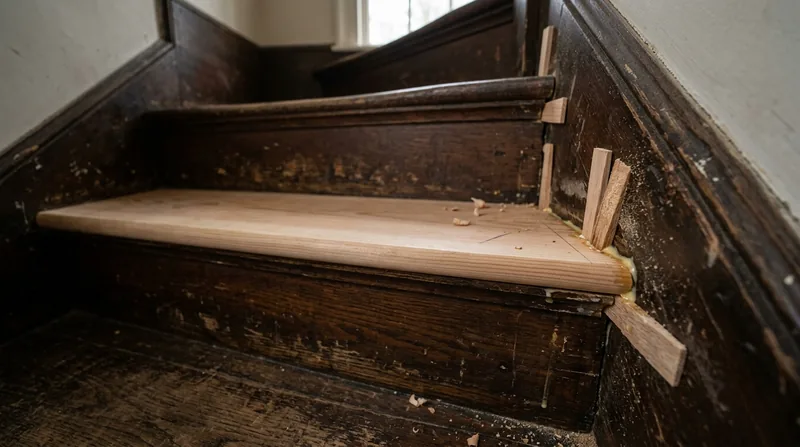




Stair & Railing Repair in Winston-Salem keeps the steep front steps and wraparound back porches of our hillside homes safe and solid. Winston-Salem's Queen Anne Victorians, Craftsman bungalows, and Colonial Revival houses often sit on sloped lots where tall front staircases and raised decks are structural facts of daily life. Over decades, treads wear, stringers split, balusters loosen, and railings develop gaps that feel unsafe underfoot. We repair and rebuild these staircases, restore period railings to their original joinery, and install sturdy handrails and attic ladders that last. Whether your home sits in the West End, Ardmore, or Buena Vista, squeaky treads and wobbly banisters are problems we solve with solid carpentry, not shortcuts.
Why Stair and Railing Safety Matters in Winston-Salem's Hillside Homes
Winston-Salem's terrain rolls and rises. Many homes climb steep lots, and that means front steps and back decks that take real wear year after year. Humidity from our long summers and freeze-thaw cycles in winter stress wood joints and fasteners. Balusters work loose, treads crack, stringers sag under foot traffic, and railings develop movement that feels unsafe. A loose banister or squeaky tread is not just annoying; it signals wood fatigue and joint failure that worsens if left alone. Addressing stairs and railings early keeps your home safe and prevents costlier structural work down the line.
- We identify loose balusters and tighten or replace fasteners to restore railing rigidity.
- We repair split or cracked stringers by reinforcing them with sister boards or splinting broken grain.
- We replace worn treads and risers, matching existing wood species and finish when restoration is the goal.
- We rebuild newel posts and restore mortise-and-tenon joinery on period railings without sacrificing original detail.
- We install new handrails and attic ladders where code and safety demand it.
Stair safety is not optional, and the sooner you address movement or wear, the better the repair outcome.
Local example: A 1920s Craftsman home in Ardmore had a front staircase with balusters that rattled when you gripped the rail. The stringers had shrunk, and the baluster tenons had loosened in their mortises. We re-glued the joints, shimmed the balusters tight, and added hidden fasteners to lock the assembly. The staircase is now solid and still looks period-correct.
For more on structural wood problems, see our wood rot repair page.
How We Repair Stairs and Railings: Our Process in Winston-Salem
Every staircase and railing tells a story about how it was built and what it has endured. We start by understanding that story. We inspect the stringer, treads, risers, balusters, newel posts, and rail for movement, cracks, rot, and loose joinery. We test fasteners, check for hidden damage under paint or stain, and assess whether repair or replacement is the honest answer. Then we propose a scope that restores safety and preserves character where the wood justifies it.
- We inspect the full staircase assembly, testing movement and identifying loose joints or fasteners.
- We probe for wood rot in stringers, treads, and newel posts, especially near the base where moisture collects.
- We disassemble balusters and railings only as far as needed to access and repair the damaged or loose components.
- We reinforce split stringers by sistering new wood alongside the old grain, or by splinting and gluing the crack if the wood is sound.
- We re-glue mortise-and-tenon joints on period railings and add hidden fasteners to lock them permanently.
- We replace worn treads and risers in matching wood species and finish, or restore the original wood if it can be salvaged.
- We install new handrails, balusters, or attic ladders where code requires them or homeowners request them.
The result is a staircase that is safe, solid, and as close to its original character as the wood allows.
Real job: A Victorian home on Holly Avenue had back porch steps with treads that had cupped and cracked from decades of moisture. The stringers were sound but the treads were beyond restoration. We replaced them with new Douglas fir treads, stained and finished to match the existing rails. The homeowners kept the original newel post and balusters, and the porch looks original again.
Related work includes deck and porch repair, which often involves the same wood species and joint techniques.
Stair and Railing Repair Methods: What Works Best
| Approach | Description | Best for |
|---|---|---|
| Tightening and Re-fastening | We remove balusters, re-glue mortise-and-tenon joints, and add hidden fasteners to lock loose assemblies permanently. | Loose railings, period joinery, and balusters that rattle or move. |
| Stringer Repair and Sistering | We reinforce cracked or split stringers by gluing and screwing new sister boards alongside the damaged grain, restoring load capacity. | Cracked stringers, sagging treads, and wood that is structurally sound but fractured. |
| Tread and Riser Replacement | We remove worn or rotted treads and risers and install new ones in matching species and finish, preserving the original stringers and balusters. | Cupped, cracked, or rotted treads; worn nosing; and finish restoration on historic stairs. |
| Period Railing Restoration | We disassemble, re-glue, and restore mortise-and-tenon railings, newel posts, and balusters to original joinery standards without replacing sound wood. | Victorian, Craftsman, and Colonial Revival railings with original joinery and character details. |
| Handrail and Attic Ladder Installation | We install new handrails, balusters, and attic ladders to meet current code and safety standards. | Code compliance, accessibility improvements, and safe access to attics or upper floors. |
Stair and Railing Repair Cost in Winston-Salem: What to Expect
The cost of stair and railing repair depends on scope, wood condition, and whether you are repairing or replacing. A simple re-fastening job on a loose railing might start around $600 to $900. Replacing worn treads on a full flight of stairs typically runs from $1,200 to $2,000, depending on wood species and finish. Repairing or sistering a cracked stringer, or restoring a period railing with mortise-and-tenon joinery, can range from $1,500 to $3,500 or more. Large projects such as rebuilding an entire front staircase or restoring a multi-level Victorian railing often require an on-site estimate because the scope varies so much.
The main factors that affect cost are: the number of treads and balusters involved, whether the stringers need repair or replacement, the wood species you choose (Douglas fir, oak, or redwood cost differently), access and existing finishes, and whether you want period-correct restoration or modern replacement. We recommend getting 2 to 3 estimates from local carpenters so you understand what drives the price in your home. See our full pricing guide for more detail on how we structure estimates and what is included.
Travel to Winston-Salem and surrounding areas is included in our pricing, with no separate mileage fee. We respond to estimate requests within 24 hours and there is no obligation to book once you have our number.
Stair and Railing Repair Near Me: What Winston-Salem Homeowners Should Know When Hiring a Contractor
Hiring the right carpenter for stair and railing work is important because these repairs touch safety, code compliance, and sometimes historic character. Look for a contractor who is fully insured and can show proof of coverage. Ask for references from recent jobs and call them; ask specifically whether the contractor listened to the homeowner's priorities, whether the work was completed on time, and whether the finish matched expectations. Get written estimates from at least two contractors so you can compare scope and price. Ask whether the contractor has experience with your home's era and style; a Craftsman bungalow in Ardmore needs different knowledge than a 1950s ranch in Sherwood Forest.
Understand that altering or adding stairs may require a permit depending on what you are doing and where you live. Building departments vary, so contact the Winston-Salem Building Department or your local jurisdiction to confirm. If your home is in a historic district or governed by an HOA, check those rules too; some historic homes in Old Salem or near Reynolda Park have covenants that affect what railings or handrails you can install. A good contractor will help you navigate these questions, but the permit itself is your responsibility to verify with your local building department.
When you are ready to move forward, contact us for a free estimate. We will inspect your stairs, explain what we find, and propose a repair plan that is honest about cost and outcome.
Stair & Railing Repair in Winston-Salem: Pricing Guide
| Service | Price | Details |
|---|---|---|
| Tightening and Re-fastening Loose Railings | Starting at $600 | Re-gluing joints and adding hidden fasteners to lock balusters and railings; price depends on number of balusters and accessibility |
| Tread and Riser Replacement | Starting at $1,200 | Replacing worn or cracked treads on one flight; cost rises with stair width, wood species chosen, and finish complexity |
| Stringer Repair or Sistering | Starting at $1,500 | Reinforcing cracked stringers with sister boards or splinting damaged grain; price depends on damage extent and stringer accessibility |
| Period Railing Restoration | Starting at $1,800 | Disassembling, re-gluing, and restoring mortise-and-tenon railings on Victorian or Craftsman homes; cost reflects joinery complexity and baluster count |
| Full Staircase Rebuild or Large Multi-Level Railing Work | On estimate | Scope varies too much to quote without an on-site inspection; includes new stringers, treads, or complete railing restoration |
| Free Estimate and Travel | Included | No obligation, response within 24 hours, no separate mileage fee in Winston-Salem and surrounding areas |
Indicative pricing, the exact cost depends on square footage, finish, and site access. Free personalized estimate within 24h at (336) 594-5653.


