Carpenter in Winston-Salem, NC: Wood Rot, Structure & Finish Work
Winston-Salem Carpentry Pros is a local residential carpentry shop serving homeowners throughout Winston-Salem and the surrounding areas including Kernersville, Clemmons, Lewisville, and High Point. We work on the full range of carpentry: structural repairs to floor joists, beams and framing; wood rot and insect damage; and finish work including trim, doors, cabinets and custom built-ins. Our carpenters know this building stock intimately, from the Moravian brick and half-timbered homes of Old Salem to the Queen Anne Victorians of the West End, the Craftsman bungalows of Ardmore and Washington Park, the mid-century ranches of Sherwood Forest, and the newer subdivisions spreading into Lewisville and Kernersville.
Most of these homes sit on vented crawlspaces over brick piers set in Piedmont red clay, a foundation condition that holds water against the structure after heavy rain. The humid subtropical climate keeps wood under constant moisture stress, feeding rot in sills, rim joists, porch floors and window frames, while eastern subterranean termites remain active for much of the year. Add a century of settling, and you have the real conditions we work with every day. When you need a carpenter near me in Winston-Salem who understands how your house actually fails and how to repair it honestly, call us for a free wood rot inspection.
Why Wood Fails in Winston-Salem, and How We Read It
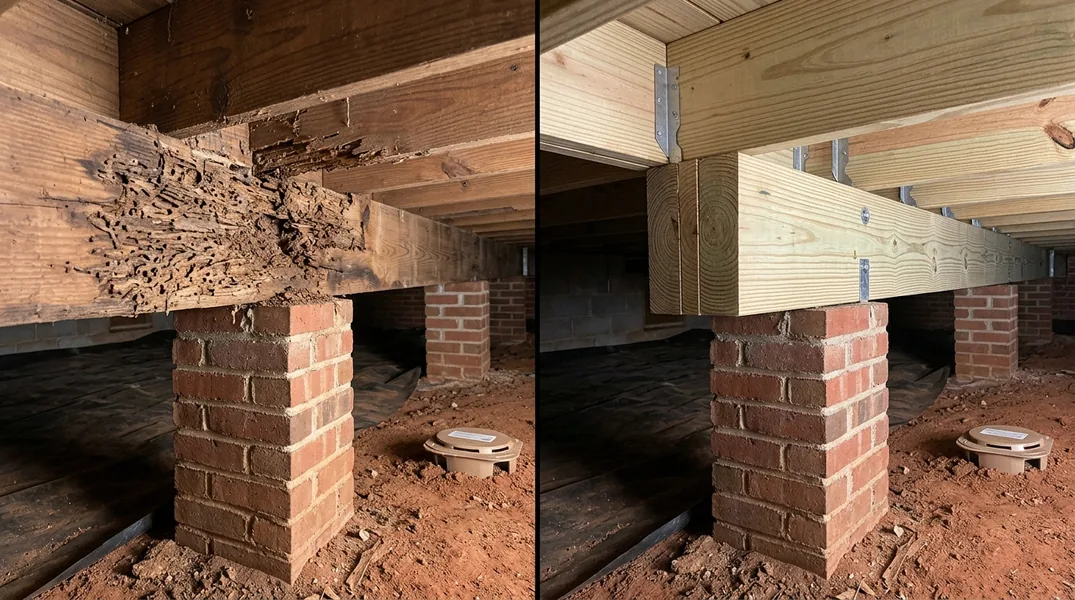
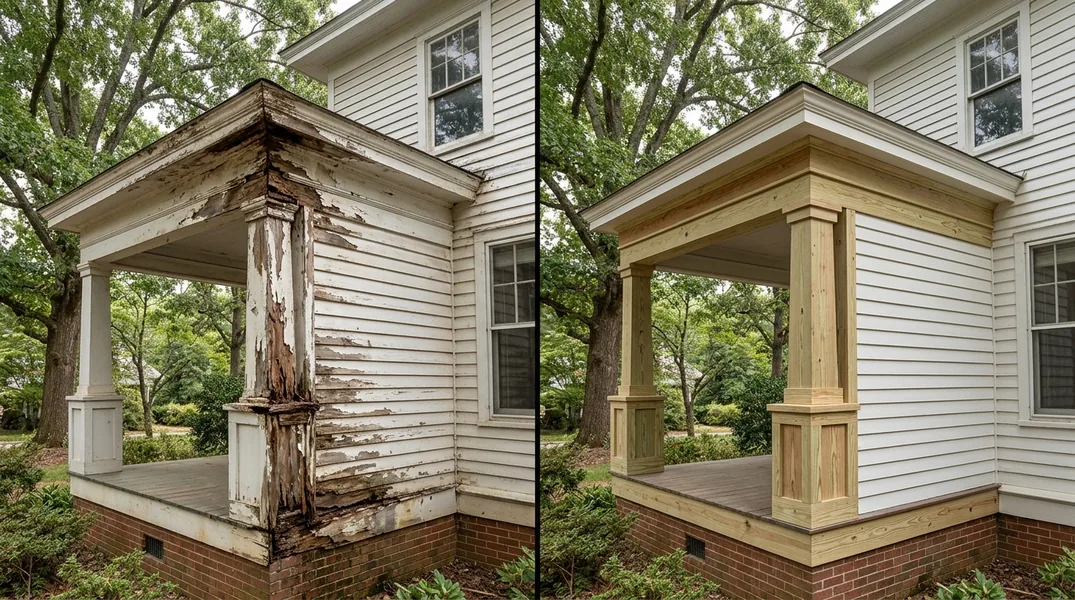
Wood rot and termite damage are the most common reasons homeowners call a carpenter in Winston-Salem, and both are rooted in the local climate and building stock. Dry rot is not a disease of standing water but of sustained moisture in the wood itself. The long, humid summers and the moisture that collects in crawlspaces and against exterior siding create exactly the conditions a wood-rotting fungus needs to colonize a joist, sill plate, rim joist or deck ledger. Wet rot settles in where water sits longest: at window sills, thresholds, the base of porch columns, and where a deck ledger meets the rim joist. Termite damage is different again. Eastern subterranean termites hollow out the interior of a member while the paint film and outer shell remain intact, so a joist or header can look sound from six feet away while the section that actually carries load has been eaten away.
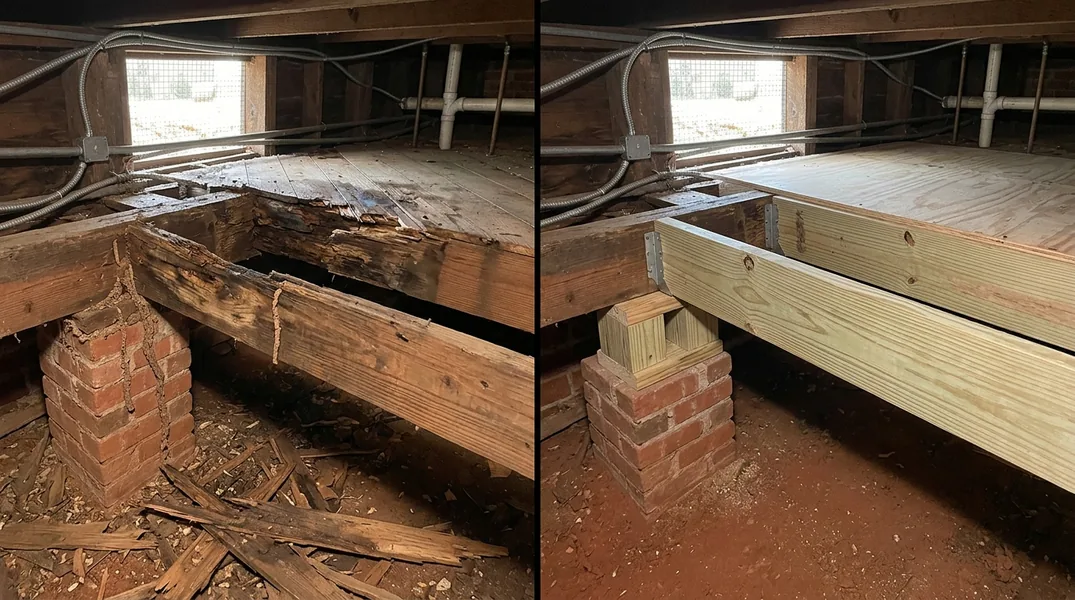
We diagnose each of these by probing to find where sound wood begins, by checking the framing behind the visible surface, and by tracing the water path that fed the decay. A carpenter who looks only at the surface and reaches for filler is not doing the work. Cosmetic surface rot on a member with sound section underneath can be cut out and rebuilt with new wood. A joist or beam that has lost too much of its section needs to be replaced or sistered with a new member. The water source must be closed, or the repair fails again within a few years. That is the honest call, and it is the one we make. We repair and replace wood damaged by termites, working from your own pest inspection report. We do not perform pest control, fumigation or chemical treatment, which is a separate regulated trade. Call (336) 594-5653 to discuss what you have found, or learn more about wood rot repair and how we approach termite damage repair.
The decision to repair or replace comes down to three things: how much sound section is left in the member, whether the water source can be closed, and what the two costs compare to. A floor joist with rot at one end but sound wood for most of its span can often be sistered with a new joist alongside it, spreading the load. A sill plate that is soft for its entire width needs to be replaced. We quote both options honestly when both are real, and we explain the tradeoffs so you can make the choice that fits your house and your budget.
Structural Carpentry in Winston-Salem: Joists, Beams and Settling
Structural carpentry in Winston-Salem means working with a century or more of settling. The Craftsman bungalows, brick foursquares and Victorians on the hills have moved over decades, and sloping floors and doors that stick in their frames are the normal condition, not a sign of active failure. What matters is whether a member is still moving and how the wood is actually doing where it bears load. A floor joist or subfloor section that has settled can often be reinforced by sistering a new joist alongside the old one, or by replacing just the section that has failed. A sill plate or rim joist that has rotted can be replaced in sections without lifting the entire house. These are the repairs that hold, because they work with the structure rather than against it.
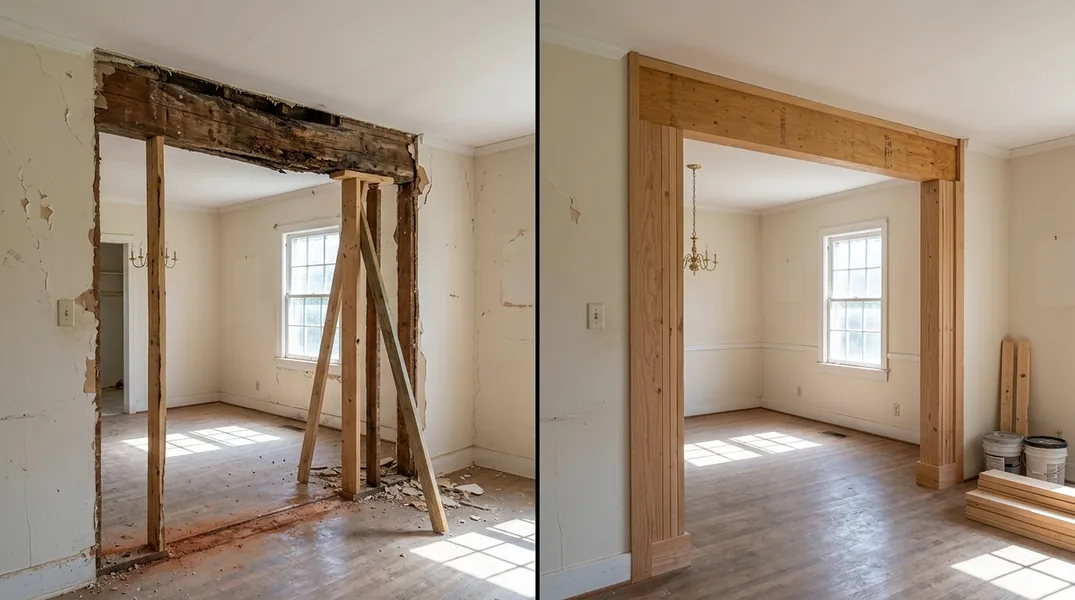
Larger work, such as beam replacement or load-bearing wall removal, commonly requires a permit from the local building department and engineered drawings from a licensed structural engineer. We build to those drawings. We do not produce engineering opinions or load calculations ourselves. The structural engineer sizes the beam, calculates the loads, and specifies the support. We install it. This separation is important because it keeps each trade in its lane and protects you. A permit ensures the work meets code and is inspected. Always verify requirements with your local building department before starting.
Finish Carpentry and Built-Ins in Winston-Salem Homes
Finish carpentry in this housing stock is about craft and attention to detail. The bungalows of Ardmore have original trim and baseboard worth matching. The Victorians have bay windows and out-of-square openings that demand scribing and coped joints, not caulked corners. We install crown molding and baseboard, hang interior doors, build custom built-ins and shelving, and install cabinets and vanities with consistent reveals and profiles that honor the existing millwork. A coped joint takes longer than a caulked corner, but it holds its shape as the house moves and the seasons change.
Many of these homes have compact floor plans and walls that are neither flat nor plumb. We work to the house as it is, not as the blueprint says it should be. When we install a new door casing or baseboard, we scribe it to the wall so it sits tight. When we match existing crown molding, we find the profile and run it without interruption. This is not handyman work. It is the kind of carpentry that makes the difference between a repair that looks temporary and one that belongs in the house.
Permits, Repair-or-Replace & What We Do Not Do
Permits are commonly required for structural work such as removing or altering a load-bearing wall, replacing beams or joists, and installing or modifying exterior decks and stairs. Requirements and thresholds vary by jurisdiction, and some smaller repairs may not require a permit depending on local code. We recommend verifying with the Winston-Salem building department before starting any project to understand what applies to your work. A permit ensures the work is inspected and meets code, which protects both the integrity of your home and your own liability.
The decision to repair or replace damaged wood depends on how much sound section remains, whether the water source can be closed, and what each option costs. We can help you document damage for an insurance claim, but we cannot promise coverage or predict whether a claim will be approved. That is between you and your insurance company. We are fully insured and we build to code and to the drawings provided by any engineer your project requires. Requirements vary, and local codes differ. Always verify with the Winston-Salem building department before starting your project. Call us to discuss your repair and what the real options are.
Ready to get started? Winston-Salem Carpentry Pros serves in Winston-Salem and surrounding areas. Book your free wood rot inspection today.
Get Your Free Wood Rot Inspection