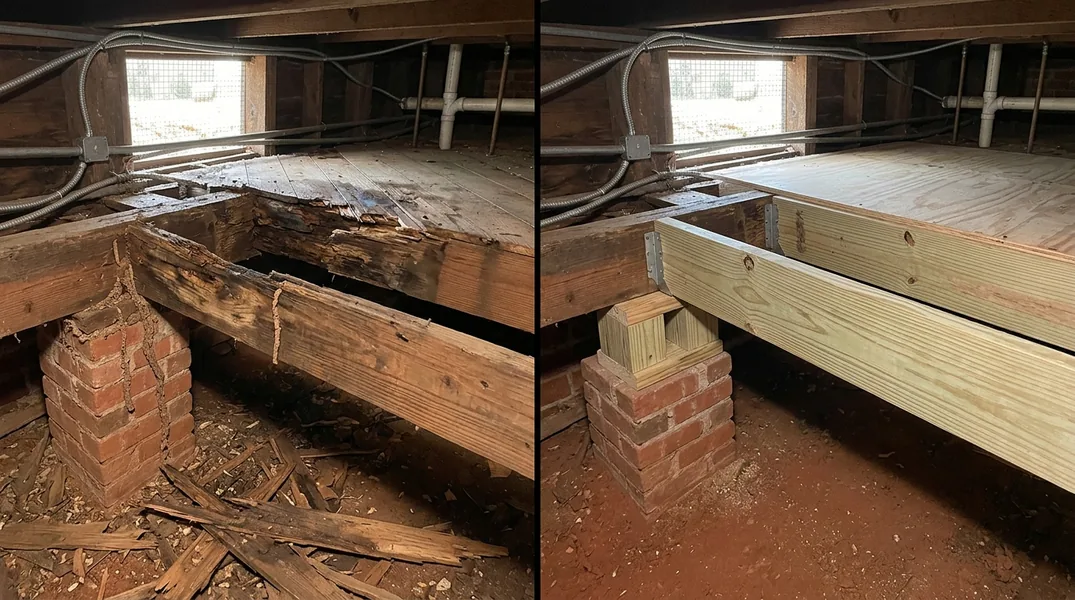
Why Porch Rot is a Silent Problem in the Piedmont
If you own a home in Winston-Salem, you know that porches are more than just an entryway. They're a defining feature of many Piedmont-area homes, and they take a beating from our humid summers and freeze-thaw cycles. Unfortunately, that same climate that makes our region beautiful also creates ideal conditions for wood rot to develop quietly beneath the surface.
Porch floors and columns are particularly vulnerable because they're constantly exposed to moisture. Rain splashes up from the ground, morning dew settles on wood surfaces, and poor drainage around the foundation can keep wood saturated for days. Unlike interior wood, porch components rarely dry out completely, especially if they're shaded or if gutters aren't functioning properly. This persistent moisture is what allows rot fungi to take hold and spread, often unnoticed until the damage becomes structural.
The real danger is that rot doesn't announce itself loudly. A column might look fine on the outside while the interior crumbles. A porch floor might feel solid underfoot for months before suddenly developing a soft spot. By the time many homeowners notice a problem, the rot has already compromised the wood's integrity, making repairs more expensive and more urgent.
How to Spot Early Signs of Porch Floor Rot
Catching Wood Rot & Dry Rot Repair early is the best way to prevent catastrophic damage and keep repair costs manageable. The first warning signs are often subtle, which is why regular inspection is so important. Start by looking at the surface of your porch boards. Soft spots, discoloration, or areas where paint is peeling or bubbling can indicate rot developing beneath the finish. Press gently on the boards with a screwdriver or awl. If the tool sinks in easily or if you can dig out crumbly, fibrous material, that's a clear sign of advanced decay.
Another common indicator is visible cracks or checking in the wood, especially if they form a pattern that looks like alligator skin. While some cracking is normal as wood ages, widespread or deep cracks combined with soft areas suggest rot is present. Pay special attention to the edges and undersides of boards, where water collects and wood stays damp longer. Look for wood that appears darker than the surrounding area, which often indicates moisture damage. In Winston-Salem, where humidity levels spike in summer, these warning signs can develop faster than in drier climates.
Don't forget to check the area where the porch floor meets the columns or the house foundation. This joint is a natural water trap and a prime location for rot to start. If you notice wood that's spongy, discolored, or where the paint has failed, schedule an inspection right away. The longer you wait, the deeper the rot spreads into structural elements like Floor Joist & Subfloor Repair components that may be hidden from view.
Identifying Rot in Porch Columns and Support Posts
Rotted porch column bases are one of the most serious structural issues a homeowner can face, because columns carry the weight of the roof and everything above. Unlike floor rot, which affects comfort and safety gradually, a failing column can lead to sudden sagging or collapse. That's why learning to spot problems early is critical.
Start by examining the base of each column, where it meets the porch floor or foundation. This is where water naturally collects, and it's where rot almost always begins. Look for soft wood, paint failure, or visible decay. Gently probe the base with a screwdriver. If the wood is hard and solid, you're in good shape. If it yields to pressure or if you can scrape away crumbly material, rot is present. Also check for gaps between the column base and its support, which can indicate the wood has shrunk due to decay.
Walk around your porch and look at the columns from different angles. Is there visible tilting or leaning? Does the porch feel level when you walk on it, or does it sag slightly in the middle or toward one end? These are signs that one or more columns may be compromised. You might also notice that doors or windows near the porch are sticking or that there are new cracks in the exterior walls of your home. All of these can point to a column problem that needs professional attention. If you notice any of these issues, don't delay in getting a professional evaluation. Contact Winston-Salem Carpentry Pros at (336) 594-5653 to schedule a free estimate.
The Role of Moisture Control in Porch Maintenance
Prevention is always cheaper than repair, and the best way to prevent porch rot is to control moisture. This starts with proper drainage. Make sure your gutters and downspouts are clean and directing water away from the porch foundation. Water should flow at least four to six feet away from your home's perimeter. If you have gutters that are clogged or downspouts that dump water near the porch, fix them immediately.
Next, examine the slope and surface of your porch floor. A properly built porch should slope gently away from the house so water runs off rather than pooling. If your porch is flat or slopes toward the house, water will collect and accelerate rot development. You can improve drainage by ensuring that vegetation near the porch is trimmed back to allow air circulation, and by avoiding placing planters or mulch directly against the base of columns.
Regular sealing and painting are also essential for wood porch maintenance. A quality exterior paint or wood sealer creates a barrier that slows water absorption. However, this barrier breaks down over time, especially in areas that get heavy sun or constant moisture exposure. Plan to repaint or reseal your porch every three to five years, depending on the climate and condition. In areas where columns or floors show signs of wear, more frequent maintenance may be needed. If you're unsure about the best maintenance approach for your specific porch, Winston-Salem Carpentry Pros can provide guidance during a professional inspection.
When to Call a Professional for Porch Repair
Some porch maintenance tasks, like painting or minor board replacement, can be handled by a skilled homeowner. However, structural issues like significant rot in columns, floor joists, or support beams require professional expertise. If you've identified soft spots, deep decay, or structural movement, it's time to call in the experts.
A professional carpenter will assess not just the visible damage but also the hidden decay that may have spread into the framing. They can determine whether boards can be patched or whether entire sections need replacement. They'll also evaluate whether the problem is localized or if it indicates a larger moisture issue that needs to be addressed to prevent future damage. In cases where columns are compromised, a professional can install temporary support while repairs are made, ensuring your porch remains safe during the work.
Winston-Salem Carpentry Pros specializes in identifying and repairing wood rot before it becomes a safety hazard. Whether you're dealing with Wood Rot & Dry Rot Repair or need assessment of a potentially damaged column base, our team has the experience to help. We serve Winston-Salem and the surrounding Piedmont region. Call us at (336) 594-5653 or visit our website to request a free estimate today.
Wood Rot & Dry Rot Repair Cost in Winston-Salem: What to Budget
The cost of porch floor rot repair or rotted porch column base repair varies widely depending on the extent of the damage, the materials involved, and the complexity of the work. A small area of surface rot on a single board might cost $200 to $500 to repair, while more extensive damage affecting multiple boards or structural elements can easily exceed $2,000 to $5,000 or more. Column replacement, which is a more involved structural repair, typically costs more because it requires temporary support systems and precise installation to ensure safety and level alignment.
The key to understanding pricing is recognizing that early intervention almost always saves money. Rot that's caught and repaired in its early stages is far less expensive to fix than rot that's been allowed to spread into framing, joists, or load-bearing elements. Additionally, if rot spreads to Floor Joist & Subfloor Repair components or requires Beam Replacement & Load-Bearing Wall Removal, costs escalate significantly.
Rather than guessing at costs or putting off an inspection, the best approach is to get a professional assessment. Winston-Salem Carpentry Pros offers a free estimate so you can understand exactly what repairs are needed and what they'll cost. This gives you the information you need to make an informed decision and budget accordingly. Delaying repairs because of cost concerns often leads to more extensive and more expensive damage down the line.
Looking for a professional carpentry contractor in Winston-Salem? Winston-Salem Carpentry Pros responds fast for all your carpentry needs.
Get a Free QuoteOur services: Wood Rot & Dry Rot Repair · Termite Damage Repair · Floor Joist & Subfloor Repair