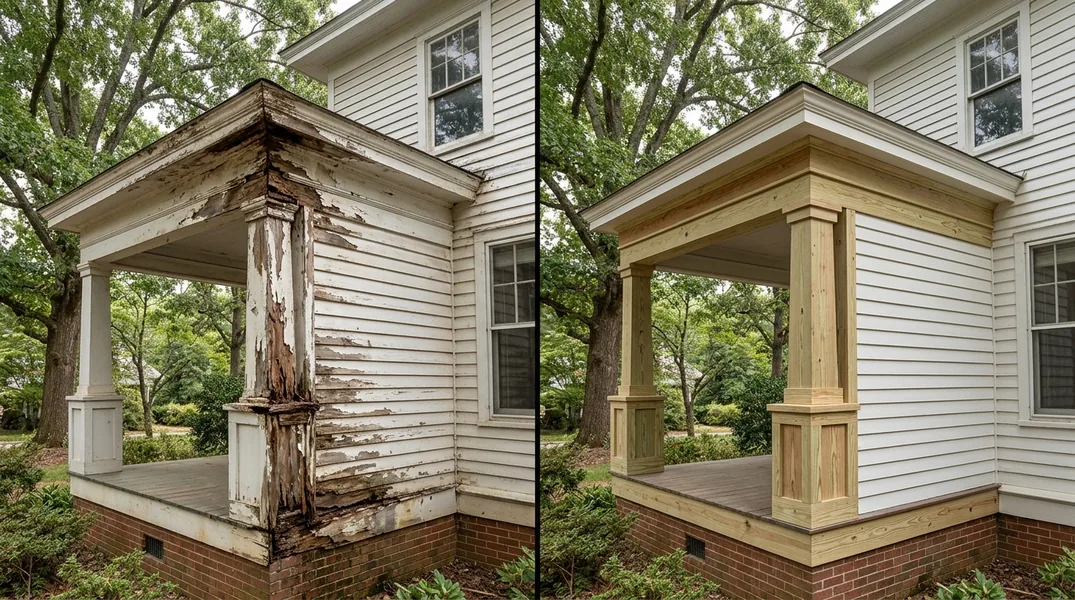
Why Historic Homes in Winston-Salem Demand Different Maintenance
If you own a craftsman bungalow in Ardmore or a stately Victorian in the West End, you already know that your home is more than just a place to live. These properties are architectural treasures, built with materials and techniques that reflect the craftsmanship of their era. But that historical charm comes with a responsibility: understanding how to care for aging wood, original siding, and structural elements that have been standing for 80 to 120 years.
Winston-Salem homeowners with period properties face unique challenges. The original wood siding on your 1920s bungalow or Victorian home was never designed to last forever, and modern building materials can't always replicate what was used a century ago. Add to that our region's humidity, seasonal temperature swings, and the occasional pest problem, and you have a recipe for wood deterioration if you're not paying attention.
The good news is that with the right knowledge and proactive maintenance, you can preserve your home's character and structural integrity for generations to come. The key is understanding what to look for and when to call in a professional.
Understanding Wood Rot and Dry Rot in Older Homes
Wood rot isn't a single problem. It comes in two main forms, and knowing the difference can help you catch issues early. Wet rot, often called simply wood rot, occurs when wood stays damp for extended periods. This is especially common in Winston-Salem homes where gutters clog, flashing fails, or grading doesn't direct water away from the foundation. The wood becomes soft, spongy, and eventually crumbles. Dry rot, by contrast, is caused by a fungus that breaks down wood fibers even in low-moisture conditions, though it still requires some dampness to start.
For craftsman bungalow owners, the most vulnerable areas are typically the bottom of exterior walls, window sills, door frames, and the fascia board where the roof meets the wall. Victorian homes add the complexity of ornamental details, turrets, and wraparound porches, all of which create pockets where water can collect. If you notice soft spots when you press your finger against siding, see paint bubbling or peeling in patterns, or smell an earthy, musty odor near the foundation, you may already have a problem developing.
Wood Rot & Dry Rot Repair is not a DIY project for most homeowners. The fungus that causes decay spreads invisibly through wood, and surface-level patching often misses the real damage underneath. A professional inspection can reveal the true extent of the problem and recommend the right solution, whether that's targeted repair or replacement of affected sections.
Wood Siding Repair: Keeping Your Home's Exterior Protected
The exterior of your historic home is its first line of defense against weather and pests. Original wood siding on Ardmore bungalows and West End Victorians is often thicker and more durable than modern alternatives, but it still needs maintenance. Proper paint or stain, caulking around windows and doors, and regular inspection are non-negotiable if you want to avoid bigger problems down the road.
Many homeowners don't realize that wood siding problems start small and compound quickly. A crack in the paint allows moisture to seep in. Within a season or two, the wood begins to soften. By year five, you might need to replace an entire wall section. This is why catching issues early matters so much. If your home has areas where the paint is failing, where siding is warping, or where you can see exposed wood, those spots need attention before they become structural concerns.
Wood siding repair can range from simple caulking and repainting to replacing damaged boards or sections. A qualified carpenter can assess whether your siding can be saved with repair or if replacement is the better choice. This decision depends on the extent of damage, the availability of matching materials, and your budget. In some cases, matching original wood siding requires sourcing reclaimed or specialty lumber to maintain historical accuracy.
Historic Home Maintenance: A Year-Round Checklist
Preventive maintenance is always cheaper than emergency repair. For owners of craftsman bungalows and Victorian homes, a simple routine can add decades to the life of your wood elements. Spring is the time to inspect your roof, gutters, and downspouts. Clear debris, check for missing shingles, and make sure water is flowing away from your foundation. Summer is ideal for examining exterior siding, caulking gaps, and touching up paint or stain. Fall means cleaning gutters again before winter weather arrives.
Winter brings its own challenges. Ice dams can cause water to back up under your roof, leading to interior damage and hidden rot. Proper attic ventilation and insulation help prevent this. Check your basement or crawlspace for standing water or dampness, which signals a drainage problem that needs fixing. Spring thaw often reveals issues that developed during winter, so don't skip your seasonal inspections.
Beyond seasonal tasks, budget for professional inspections every two to three years, especially if your home is over 80 years old. A trained eye can spot early signs of wood rot and dry rot before they become expensive structural problems. Many homeowners in Winston-Salem find that this small investment in professional assessment pays for itself many times over by preventing catastrophic damage.
When to Call a Professional: Structural Concerns and Pest Damage
Some wood damage goes beyond cosmetic repair. If you notice that floors are sagging, doors no longer close properly, or windows are sticking in ways they didn't before, you may have structural issues. These signs can indicate rot in floor joists, beams, or load-bearing walls. Floor Joist & Subfloor Repair and Beam Replacement & Load-Bearing Wall Removal are serious undertakings that require professional expertise and, in most cases, building permits.
Termite damage is another red flag that demands immediate professional attention. Unlike wood rot, which is fungal decay, termite damage involves active pests eating through your wood from the inside out. If you see mud tubes on your foundation, wood that sounds hollow when tapped, or notice swarms of winged insects around your home in spring, contact a professional immediately. Termite Damage Repair often requires coordination with a pest control specialist to eliminate the infestation and then repair the structural damage left behind.
The line between a DIY project and a professional job often comes down to safety and building codes. Historic home repair in many cases requires permits and inspections, especially if the work affects structural integrity. A qualified carpenter familiar with historic homes can navigate these requirements and ensure your repairs are done right.
Getting Started: Your Next Steps for Historic Home Preservation
If you own a craftsman bungalow or Victorian home in Winston-Salem, the time to act is now. Don't wait for a crisis to force your hand. Start by doing a thorough walk-around of your property. Look at your siding, check your gutters, inspect your foundation, and note any areas where paint is failing or wood looks damaged. Take photos and make a list.
Next, reach out to Winston-Salem Carpentry Pros for a professional assessment. A detailed inspection can identify problems you might miss and help you prioritize repairs based on urgency and impact. Whether you're dealing with minor cosmetic issues or serious structural concerns, knowing what you're facing is the first step toward a smart maintenance plan. Call (336) 594-5653 or visit our website to request a free estimate.
Historic home ownership is rewarding, but it's not maintenance-free. By staying informed, keeping up with seasonal care, and bringing in professionals when you need them, you can protect your investment and preserve the character of your Ardmore bungalow or West End Victorian for years to come.
Looking for a professional carpentry contractor in Winston-Salem? Winston-Salem Carpentry Pros responds fast for all your carpentry needs.
Get a Free QuoteOur services: Wood Rot & Dry Rot Repair · Termite Damage Repair · Floor Joist & Subfloor Repair